Breadcrumb
Latest Articles
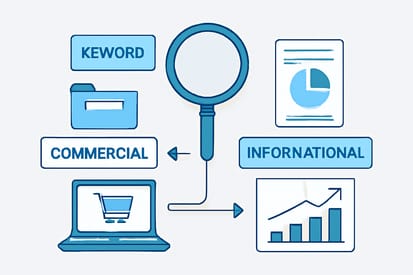





Why do keyword research tools matter more than ever?
Keyword research tools sit at the foundation of modern SEO, but their value goes far beyond finding search volume. Today, they shape content planning, provider evaluation, paid search alignment, forecasting, competitor analysis, and conversion-focused decision-making. For teams trying to grow traffic and leads without relying on brand recognition, the right setup can make the difference between steady progress and wasted effort.
This guide is built for SEO managers and marketing decision-makers who need a broad, practical view of the category. It is also relevant to digital marketing agencies managing multiple clients, small business owners who need leaner decisions, and content marketing managers responsible for turning search insight into publishable work. Each of those audiences needs slightly different outcomes, but all of them need the same thing at the start: a reliable way to connect keyword data to business priorities.
Strong keyword research tools help you:
- Understand search demand and user intent
- Prioritize commercial and informational opportunities
- Evaluate competitors and content gaps
- Support content briefs, landing pages, and reporting
- Connect SEO work to measurable business impact
At the category level, one of the most useful starting points is understanding how keyword intent shapes every later decision. That is why intent by Keyword is an essential companion topic within this broader framework.
The best approach is not collecting the most data possible. It is choosing a research system that helps your team make better decisions, faster, with clearer ROI.
What types of keyword research tools and services exist?

The category includes more than software subscriptions. In practice, keyword research tools fall into several overlapping groups, each serving a different role in the workflow.
Common categories to evaluate
- Discovery tools for finding new keyword ideas and topic variations
- Intent-focused tools for separating commercial, informational, and navigational searches
- Competitive research platforms for gap analysis and SERP review
- Workflow and reporting tools for tracking, prioritization, and collaboration
- Service-led providers that combine data with strategic interpretation
This distinction matters because not every team needs the same level of support. A digital marketing agency may want scalable exports, account segmentation, and standardized reporting across clients. A small business owner may need a simpler solution that highlights a few high-value terms clearly. A content marketing manager often needs clustering, briefing support, and a practical link between keyword research and editorial calendars.
You should also decide whether your needs are mostly operational or strategic. If your team already knows how to interpret keyword data, a self-serve tool may be enough. If the challenge is prioritization, provider selection, or internal alignment, service support may deliver better value.
Related subjects like comparing agencies with tool providers, evaluating hiring questions, and reviewing ROI from keyword research investments become much easier once you understand which type of support your team actually needs.
How does intent shape keyword research and tool choice?

Intent is one of the most important filters in SEO because it helps you understand what a searcher wants before you decide what to build. Two keywords can have similar volumes and difficulty scores but lead to very different outcomes if one reflects learning behaviour and the other signals buying interest.
Why intent matters in tool selection
- Commercial intent helps identify pages and topics closer to conversion
- Informational intent supports awareness, education, and trust building
- Navigational intent clarifies brand or destination-focused searches
- Mixed-intent queries reveal where SERP analysis matters most
This framework affects every stage of the workflow. It changes how you evaluate page types, prioritize opportunities, and measure performance. It also helps teams avoid the common mistake of chasing traffic that looks impressive but contributes little to pipeline or revenue.
For a content marketing manager, intent improves topic clustering and brief quality. For agencies, it supports clearer client recommendations and stronger reporting logic. For small businesses, it creates focus by separating curiosity-driven traffic from likely buyers. For in-house SEO managers, it makes forecasting and stakeholder conversations much easier.
If you want a deeper overview of this framework, intent by Keyword breaks down the categories, practical use cases, and workflow applications in more detail.
The broader point is simple: tool choice should follow intent needs, not the other way around.
What should you compare before choosing a tool or provider?
Choosing between platforms, service providers, or a hybrid setup requires more than a feature checklist. The best decision usually comes from comparing how each option supports your goals, workflow, and available expertise.
Compare options across these factors
| Factor | Why it matters |
|---|---|
| Intent analysis | Shows whether the solution helps separate keyword value by user goal |
| Data quality | Affects trust in volume, competition, and SERP insights |
| Workflow fit | Determines whether the team will actually use the tool consistently |
| Reporting clarity | Helps stakeholders understand findings and next steps |
| Pricing structure | Supports realistic ROI evaluation |
| Support model | Clarifies whether you are buying access, strategy, or both |
UK-based teams should also review local phrasing, competition patterns, and the provider’s ability to interpret market nuance. A small business owner may prioritize fast clarity and simple recommendations. A digital marketing agency may need repeatable frameworks across accounts. A content marketing manager may care most about transforming research into briefs, refresh plans, and content clusters.
This is also where nearby topics become highly relevant, including questions to ask when hiring a search optimization company, keyword research evaluation checklists, and CPC-based ROI analysis. Those deeper decision-stage resources help narrow the shortlist once your baseline criteria are clear.
The strongest choice is usually the one that reduces friction between research and action.
What does a practical SEO workflow with keyword tools look like?
A useful workflow connects keyword discovery to content, optimization, and measurement. Without that connection, even good tools become underused. The goal is not to gather more exports. It is to create a repeatable process that improves decisions over time.
A practical workflow often includes
- Defining goals around leads, traffic quality, market entry, or sales support.
- Building keyword groups by topic, intent, and funnel stage.
- Reviewing competitors and current SERP patterns.
- Prioritizing pages and opportunities by effort and value.
- Turning research into briefs, landing pages, refreshes, or campaigns.
- Tracking rankings, conversions, and broader business impact.
This kind of workflow helps different audiences in different ways. SEO managers can tie research to forecasts and performance reviews. Agencies can standardize delivery across clients. Small business owners can focus only on the pages most likely to produce enquiries. Content marketing managers can align search insights with editorial planning and update cycles.
As teams mature, they often add deeper layers such as CPC review, ROI modeling, and post-launch performance analysis. That is where future resources like ROI case studies and keyword investment planning can become especially useful.
The most effective workflow is not the most complex one. It is the one your team can follow consistently, refine regularly, and connect clearly to business outcomes.
How should you think about ROI, UK context, and future trends?
ROI is one of the biggest reasons teams invest in keyword research tools, but it is also one of the easiest areas to oversimplify. The lowest subscription cost does not always create the best return. A more expensive setup may pay off if it improves targeting, speeds up decision-making, and helps teams focus on commercially meaningful opportunities.
Important factors in ROI evaluation
- Time saved in research, prioritization, and reporting
- Better page targeting and content performance
- Stronger alignment between SEO and commercial goals
- More accurate decisions about provider selection and budget allocation
- Clearer reporting for leadership and stakeholders
For UK organizations, local language, competition signals, and market nuance can influence keyword value more than generic global data suggests. That is why regional fit matters when choosing both tools and services. A digital marketing agency may need scalable systems with local flexibility. A small business owner may need a lighter setup with clearer priorities. A content marketing manager may need tools that fit directly into briefing and publishing workflows.
Looking ahead, expect better intent modeling, smarter workflow automation, and stronger links between keyword data and business reporting. The teams that benefit most will be the ones that use these improvements to make faster, clearer decisions.
Use this page as your starting point, then move into intent by Keyword for a closer look at how search intent should shape every tool, provider, and workflow choice you make.
FAQ
What are keyword research tools used for?
They are used to identify search demand, analyze intent, review competitors, prioritize opportunities, and support content or landing page planning. Their real value comes from helping teams make better decisions, not just collecting more data. A good setup should improve action as much as insight.
How should SEO managers choose keyword research tools?
They should compare intent analysis, reporting clarity, workflow fit, data quality, and ROI potential. The best option is the one that supports the team’s actual planning and execution process. It should also match commercial goals, not just traffic targets.
Are keyword research tools enough for digital marketing agencies?
Often they are, especially when the agency already has strong in-house SEO capability. Tools help agencies scale research, reporting, and prioritization across multiple clients. External service support may still be useful for specialist analysis or strategic planning.
What is the best keyword research approach for small business owners?
Usually, it is a focused approach that prioritizes a limited set of high-value opportunities. Small business owners benefit more from clarity and action than from extremely deep datasets. Simplicity, relevance, and speed often matter most.
How do content marketing managers use keyword research tools?
They use them to build topic clusters, create briefs, identify refresh opportunities, and map content to user intent. This helps content teams publish more strategically and connect editorial work to measurable goals. Intent is especially useful when deciding which topics deserve priority.
Why does keyword intent matter so much?
It tells you what the searcher is likely trying to accomplish, which affects page choice, content format, and expected outcomes. Without intent analysis, teams often target terms that attract traffic but not meaningful conversions. It is one of the clearest ways to improve SEO decision quality.
How can I evaluate ROI from keyword research tools?
Look at time saved, better targeting, improved lead quality, stronger content performance, and clearer decision-making. Price matters, but it should be weighed against the practical business impact of the tool or service. ROI is usually clearer over several months than in the first few weeks.
Where should I start if I want a broader framework for intent?
A strong next step is intent by Keyword, which explains how to classify searches and apply that framework in real SEO workflows. It gives you a practical lens for choosing tools, organizing research, and aligning content with user goals.